
7 Steps to Build a Successful Marketing Strategy
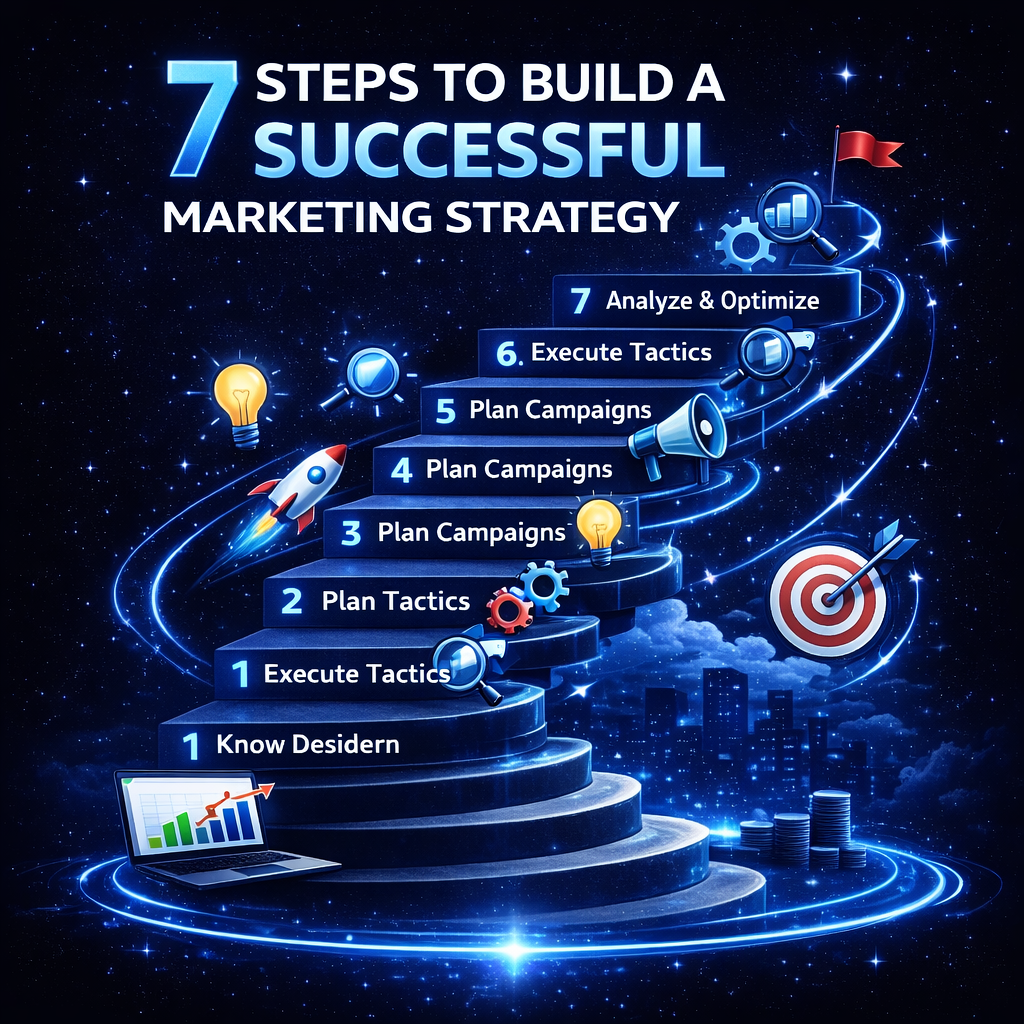
A strong marketing strategy
A strong marketing strategy is essential for any business that wants to grow and stay competitive. A marketing strategy helps businesses understand their customers, promote their products effectively, and achieve long-term goals. Without a clear strategy, marketing efforts can become unorganized and may not produce the desired results.
In today’s digital world, businesses have many marketing channels such as search engines, social media, email marketing, and paid advertising. A successful marketing strategy helps companies decide how to use these channels in the most effective way to reach their audience.
seven simple steps that businesses can follow to build a successful marketing strategy.
1. Set Clear Marketing Goals
The first step in building a marketing strategy is defining clear and realistic goals. Marketing goals give direction to your campaigns and help you measure success.
Some common marketing goals include increasing website traffic, generating more leads, improving brand awareness, or boosting sales. Clear goals help businesses focus on specific outcomes rather than random marketing activities.
For example, instead of setting a vague goal like “grow the business,” you can set a measurable goal such as increase website traffic by 30% in six months or generate 100 new leads every month. When goals are specific and measurable, it becomes easier to track progress and improve results.
2. Understand Your Target Audience
A successful marketing strategy always focuses on the right audience. Businesses need to know who their ideal customers are and what they are looking for.
Understanding your audience includes studying factors such as age, location, interests, behavior, and purchasing habits. When businesses know their audience well, they can create marketing messages that connect with customers.
For example, a business targeting young consumers may focus on social media platforms like Instagram, while companies targeting professionals may use LinkedIn marketing.
Knowing your target audience helps businesses create personalized campaigns that attract the right people and improve customer engagement.
3. Conduct Market Research
Market research is an important step in developing a successful marketing strategy. It helps businesses understand the market, industry trends, and customer needs.
Through market research, businesses can identify opportunities and challenges in their industry. It also helps companies learn what customers expect from products or services.
Market research can include analyzing customer feedback, reviewing industry reports, and studying market trends. This information helps businesses make better marketing decisions and create strategies that match customer expectations.
Businesses that invest time in market research are more likely to build effective and successful marketing campaigns.
4. Analyze Your Competitors
Understanding competitors is another key step in building a marketing strategy. Competitor analysis helps businesses learn how other companies promote their products and reach customers.
By studying competitors, businesses can identify successful marketing tactics and areas where they can improve. This may include analyzing competitors’ websites, social media activities, advertising strategies, and content marketing efforts.
The goal is not to copy competitors but to learn from their strengths and weaknesses. Businesses can then create unique marketing approaches that stand out in the market.
A strong competitive analysis helps companies develop better strategies and gain a competitive advantage.
5. Choose the Right Marketing Channels
Once businesses understand their audience and competitors, the next step is selecting the right marketing channels. Marketing channels are platforms used to promote products and connect with customers.
Some popular marketing channels include:
Search Engine Optimization (SEO)
Social Media Marketing
Content Marketing
Email Marketing
Paid Advertising
Each channel has different advantages. For example, SEO helps businesses attract organic traffic from search engines, while social media marketing helps increase brand awareness and engagement.
Choosing the right channels ensures that businesses reach customers where they are most active.
6. Create a Content and Campaign Plan
Content is a powerful tool in digital marketing. A successful marketing strategy includes a clear content plan that helps businesses communicate with their audience consistently.
Content can include blog posts, videos, social media posts, infographics, and email newsletters. Each piece of content should provide useful information or solve a problem for the audience.
For example, educational blog posts can help improve search engine rankings, while engaging social media content can increase brand visibility and interaction.
A well-planned campaign schedule ensures that marketing activities remain organized and consistent. Consistency helps businesses build trust and maintain strong relationships with their customers.
7. Track Performance and Improve
The final step in building a successful marketing strategy is tracking results. Businesses need to monitor their marketing performance to understand what works and what needs improvement.
Key performance metrics may include website traffic, conversion rates, engagement rates, and return on investment. Marketing analytics tools can help businesses track these metrics and evaluate campaign performance.
By analyzing data, businesses can make smarter decisions and optimize their marketing strategies. Marketing is not a one-time process; it requires continuous improvement and adaptation.
Companies that regularly review their marketing results can stay ahead of competitors and achieve long-term success.
Conclusion
Building a successful marketing strategy requires careful planning and consistent effort. Businesses must focus on understanding their audience, choosing the right channels, and creating valuable content that attracts customers.
By following these seven steps—setting clear goals, understanding the audience, conducting market research, analyzing competitors, selecting marketing channels, creating a content plan, and tracking performance—businesses can develop a strong marketing strategy that drives growth and long-term success.
In today’s competitive digital environment, companies that invest in a well-structured marketing strategy are more likely to attract customers, build brand recognition, and achieve sustainable business growth.
